Defensible decision-making (Tayside)
Defensible decision-making, in the context of Adult Support and Protection in Scotland, involves making decisions that are well-founded, transparent, and can be justified.
Published on 30 Jun 2025
Decision-making is the cornerstone of practice in Adult Support and Protection. The resources and tools in this section support critical thinking and collaborative decision-making. They will also help ensure that all decisions support a person-centred and trauma-informed response.
This resource supports good multi-agency practice in identifying and responding to hoarding. It helps people to identify, understand and respond skillfully to hoarding in a trauma-informed way. The resource also outlines the responsibilities of the key statutory agencies. At the end, the guide has a useful checklist for managerial oversight of hoarding cases and a resource list of links to videos about hoarding, including input from adults who have lived experience of hoarding.
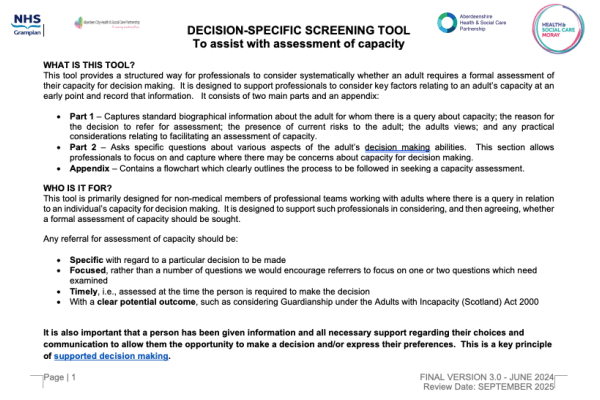
This tool provides a structured way for professionals to consider systematically whether an adult requires a formal assessment of their capacity for decision making. It is designed to support professionals to consider key factors relating to an adult’s capacity at an early point and record that information. This document is featured in the Grampian pathway for capacity assessments for protection-based decisions.
This is a quick guide to the Grampian pathway for capacity assessments for protection-based decisions. The pathway clarifies the process for seeking a capacity assessment where there are protection-based decisions linked to concerns about mental incapacity.
This eight-minute video explains the pathway for capacity assessments for protection-based decisions in Grampian. The pathway clarifies the process for seeking a capacity assessment where there are protection-based decisions linked to concerns about mental incapacity.
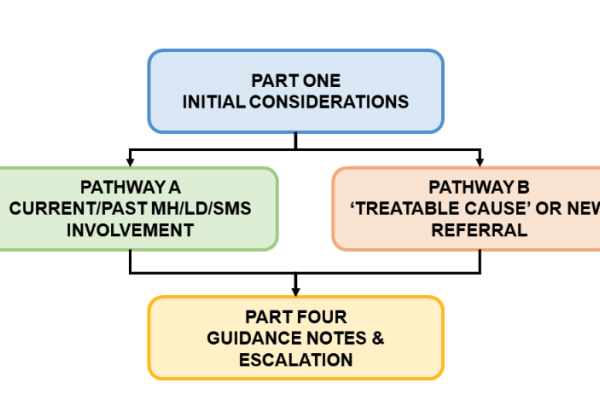
This pathway is designed to clarify the process for seeking a capacity assessment where there are protection-based decisions linked to concerns about mental incapacity. Included with the pathway are guidance notes, information on escalation arrangements, and appendices that provide suggested text to request capacity assessments.
This is an ASPire webinar from August 2024. Fiona Brown from the Office of the Public Guardian (OPG) is talking about the national role and remit of the OPG, and its links to Adult Support and Protection. There is also a presentation from Pearse McCusker and Lauren Gillespie concerning supported decision making. Supported decision making aims to protect a person’s ‘legal capacity’, or their right to have their will and preferences upheld.
This tool can be used where there is doubt about the adult's capacity to make and/or implement a specific decision. It aims to assist a practitioner consider the various elements involved in the decision-making process. It is not suitable for medical or complex decisions.

This investigation concerns Ms ST who had learning disabilities, cerebral palsy and diabetes, and is registered blind. She was treated in hospital following a neck fracture. Ms ST was deemed fit for discharge, however, she remained in hospital due to prolonged disagreement between family, health professionals and the Health and Social Care Partnership (HSCP) about discharge plans.
Supported decision-making maximises an individual’s ability to ensure that their rights, will and preferences are at the centre of all decisions that concern them. This guidance is aimed at those working with people who may have difficulty making decisions - this could be due to mental illness, dementia, a learning disability, or another condition. The guidance sets out how people can be supported to ensure that decisions made by or about them genuinely reflect their choices.