Iriss

Leading for outcomes: integrated working, Part three

Practising and sustaining the outcomes-focused approach in integrated working
  • Identifying different types of outcomes
  • Achieving an outcomes-focused approach
  • Addressing the challenges of introducing an outcomes approach
  • Involving service users and carers in identifying outcomes
  • Sustaining an outcomes approach
  • Providing leadership for an outcomes-focused approach

The challenges of working in an outcomes-focused way in integrated working

Many people who receive support will be used to a service-

Leading for outcomes: integrated working, Part two

Understanding and promoting an outcomes-focused approach in integrated working

Outcomes are discussed fully in the parent guide (Leading for outcomes: a guide) and you may wish to refer to exercises 1 and 2 on pages 11-18 of that guide as an introduction to the outcome categories, the benefits of an outcomes-focused approach, and for an understanding of how this approach differs from a service-led approach. By outcomes we mean the impact of support on a person’s life, and not the outputs of services. Outcomes are the answer to the question: so what difference does it make? They are the changes or benefits for individuals whether as service users or informal/family carers.

Leading for outcomes: Integrated working

Introduction

What is this guide?

This guide forms part of the Iriss Leading for Outcomes series. The guides are designed to support team leaders, managers and trainers to lead teams in the adoption and implementation of a personal outcomes-focused approach. The initial guide, Leading for outcomes: a guide, gives general evidence-based advice and support in leading this approach within the context of adult services.

Capacity building for mobile learning

Simple and accessible tools to help you create, find and share learning materials

During 2012-13 Iriss, in partnership with the SSSC ran a series of workshops for people involved in designing or delivering learning.

Why?

The Knowledge Management Strategy for the social services recognises that web-based tools - social bookmarking, Twitter, newsfeeds, Google search and Facebook - are now widely used for communication, collaboration and learning.

Social Services Expo and Conference 2013: Resources

Presentations and documents

This event was held on 19th March 2013 at Murrayfield Stadium, Edinburgh and was a collaboration between, ADSW, Care Inspectorate, COSLA, IRISS, SASW, SSSC and The Scottish Government

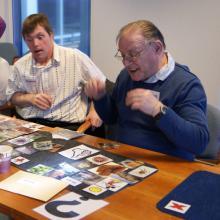
Talking Mats, the Continuous Learning Framework and outcomes

Gathering feedback about staff qualities and capabilities from people who use services: using Talking Mats and the Continuous Learning Framework

St Joseph's Service is part of a registered national charity- Daughters of Charity of St. Vincent de Paul. St Joseph's provides support services for people with a learning disability in Midlothian and Edinburgh. The Service supports 85 people through person centred planning and service delivery in a variety of locations. St Joseph's is set up in circles of best practice which ensures their focus is on connection, friendship inclusion and belonging.

Developing a framework for innovation

Embracing change

Being innovative is not a detached activity to be undertaken once and never to be repeated again

Innovation is not only for small organisations that can react quickly, or large organisations that invest vast quantities of money in developing ideas. An innovative organisation is a place where new ideas are embraced and praised, where old ideas and traditional approaches are freely challenged and adapted, and where failure is tolerated and learnt from. Sounds simple.

How do you create the right conditions for innovation?

Embracing change

There are a number of conditions that can be created by managers and leaders that can create a favourable climate for innovation to flourish. However, innovative organisations can, and do, look very different. For example:

The Linux movement has been described as a 'revolution' sweeping the software world. It describes a group of dedicated software hackers who, in their spare time, created an open operating system.

Balancing innovation and risk in social services

Embracing change

Despite a strong history of innovation and improvement in Scotland, some organisations have many structural and cultural features that impede its development by limiting risk taking and imposing tried and tested standardised solutions.

I introduced the topic of risk and innovation with a colleague the other day who managed to summarise some of the main challenges in a quick anecdote:

Embracing change

Five guides on the topic of innovation in social services in Scotland

These guides aim to explore how you can approach innovation in your social services organisation, embracing the change that presents, and managing the risks that ensue.