Iriss

Digital storytelling - the parents' story - Kenny Robertson, Mary Robertson

Autism: from diagnosis to development to independence and a career…

Liam Robertson is 20 years old and has autism. His parents talk about Liam's passion for the theatre and the support they received to help Liam develop independence and obtain an NVQ2 in customer service. They also talk about the difficulties encountered in obtaining a diagnosis and their aspirations for his future.

Digital storytelling - personalisation - David Lettice

A social worker explains how video can help us 'see beyond the disability'

"People with disabilities have all sort of skills and abilities and that's what needs to be promoted. We need to get beyond seeing the disability, and I think video's a really good way of doing it."

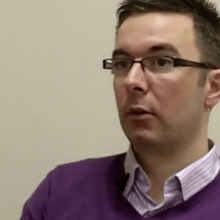
David Lettice is a social worker with East Renfrewshire Council. He became involved with Liam, a 20 year old man with autism, when his case was transferred from the transitions team to the integrated learning disability team, where David works.

Measuring personal outcomes: Challenges and strategies (video storyboard)

Creative storyboard of Iriss Insight 12

This storyboard (animated video) provides a visual, engaging summary of Iriss Insight 12, written by Dr Emma Miller, Honorary Senior Research Associate at Glasgow School of Social Work. It considers some of the challenges of measuring outcomes and emerging responses to these.

Leading for outcomes: Children and young people

An outcomes-focused approach with children and young people

A practical tool for leaders to use with staff to promote understanding of an outcomes-focused approach with children and young people.

Growing up in Scotland (GUS) : a study following the lives of Scotland's children

Paul Bradshaw, Research Director, ScotCen Social Research (February 2012)

Paul Bradshaw gives an overview of the Growing Up in Scotland (GUS) study, which is trying to capture a picture of what life is like for children in Scotland, and the different pathways that children take as they grow up. The study tracks several groups of children through their lives collecting demographic and socioeconomic data, as well as that from 1-1 interviews with parents with the aim of generating a view of the whole child.

The use of food and food practices in residential care in Scotland - Ruth Emond, Samantha Punch

University of Stirling (February 2012)

Dr Ruth Emond and Dr Samantha Punch speak about a research project that they were involved in around food practices in residential children's homes. The significance of food to both children and the adults in the home is discussed. The project involved a research fellow living alongside the children and the staff for just under a year. It also involved individual interviews and focus groups with children and staff.